How To Maintain Your Exterior House Paint in DC and Northern Virginia
Last Updated: July 25, 2024
Nothing contributes to the beauty and protection of your home like a well-maintained coat of exterior paint. And in regions like Washington DC, and Northern Virginia, where weather conditions can be harsh and varied, regular maintenance is all the more important.
Since homeowners often wonder what this looks like in practical terms, we thought we’d help. In this article, let’s explore some of the most effective ways to keep your home’s paint looking (and functioning) like new.
Understanding the Local Climate
The climate in DC and Northern Virginia presents unique challenges. Not just for knowing what to wear, but for maintaining exterior paint. As you probably already know, the area experiences high humidity, significant rainfall, and temperature fluctuations that are as unpredictable as the front page news. All of these factors work together and cause paint to deteriorate faster, leading to issues like peeling, fading, and mildew growth.
Routine Inspection and Maintenance
Regular inspections are the key to catching and addressing issues early. Here’s how:
1. Visual Check: Walk around your home and look for signs of peeling, cracking, or blistering paint. And pay special attention to areas exposed to direct sunlight and moisture.
2. Touch Test: Gently press on areas that look suspicious. If the paint feels soft or comes off easily, it may need attention.
3. Mildew and Mold: Look for black or green spots, especially in shaded or damp areas. Mildew and mold not only damage paint but can also harm the underlying structure.
Cleaning and Washing
Things like dirt, grime, and mildew can accumulate on your siding over time, causing the paint to deteriorate. But good news! This can be prevented.
Regularly clearing visible debris like leaves or twigs goes a long way in protecting your paint. Cutting back shrubs is another essential.
But one of the best ways to effectively keep debris off your paint is with a regular and thorough pressure wash. Just make sure to use a low-pressure washer or hire a professional soft wash. High pressure can strip paint and damage wood. If you’re looking for something simple, a garden hose, soap, and maybe some light scrubbing can also do the trick.
Repair and Touch-Ups
Addressing minor damages early can prevent larger, more costly repairs down the line. Things like peeling paint, fading, and mildew may seem insignificant at first but can quickly escalate if left unattended.
Peeling and Cracking : Start by scraping off the loose paint using a putty knife, making sure you remove all the flaking sections. After scraping, sand the area smooth to create an even surface for the new paint. It's important to apply a high-quality primer before repainting to help with adhesion and durability.
Fading : Repainting is the best solution for faded areas. Just make sure the new paint matches the existing color to maintain consistency. If you're looking to have it last longer, use paint with UV protection to minimize fading caused by sunlight.
Mildew and Mold : Clean the moldy areas with a mixture of water and bleach to effectively kill the mildew and mold spores. Use a scrub brush to remove all traces of mold, and rinse the area thoroughly with clean water. Important note: Allow it to dry completely before repainting! Also, to prevent future mold growth, consider using a paint with mildew-resistant properties, especially in shaded or damp areas of your home.
Preventive Measures
Before we go, let's mention what you can do to prevent premature paint failure in the future. Taking proactive steps can significantly extend the life of your exterior paint and keep your home looking its best. Here are some key preventive measures:
Caulking : Water can sometimes seep into cracks and gaps, causing the paint to blister and peel. Use a high-quality, paintable caulk to seal any openings around windows, doors, and other vulnerable areas. Regularly check these seals and reapply caulk as needed to maintain a watertight barrier.
Landscaping Maintenance : Trim back trees, bushes, and other vegetation that are close to your home. Overhanging branches and plants can trap moisture against your siding and cause damage to the paint.
Gutter and Downspout Care : Keep gutters and downspouts clean and in good repair to ensure proper drainage. Clogged or damaged gutters can lead to water overflow, which can splash onto your exterior and cause paint to deteriorate.
Quality Paint Selection : When it’s time to repaint, choose high-quality paint that’s formulated for your specific climate. Paints with UV protection, moisture resistance, and mildew-resistant properties can provide better long-term protection and reduce the frequency of repainting.
What's the Takeaway?
You probably have enough home maintenance tasks on your hands, but when it comes to maintaining your exterior paint, it’s a job that pays. Keep an eye on it, give it a clean, and fix where needed; that way you can enjoy it for years before needing to repaint!
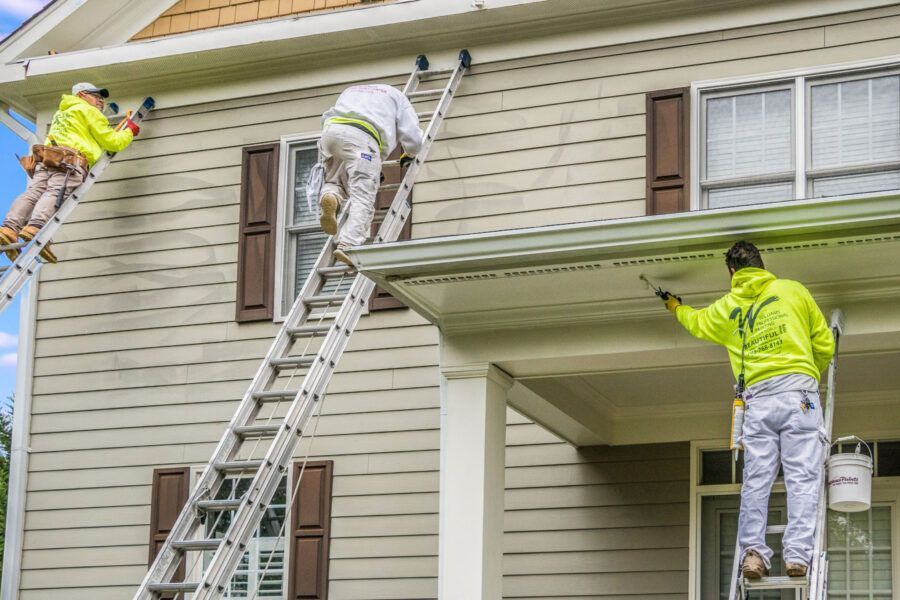
Has the time to repaint already come? Williams Professional Painting is here to help! Give us a call for more questions or inquiries.
Frequently Asked Questions
Q: What is the best time of year to repaint in DC and Northern Virginia? A: The best time to repaint is during the spring or fall when temperatures are moderate and humidity levels are lower. Avoid painting during extreme heat or cold.
Q: How often should I inspect my home’s exterior paint? A: It’s recommended to inspect your exterior paint at least twice a year, ideally during the spring and fall. This helps catch any issues early before they become major problems.
Q: Can I perform paint maintenance myself or should I hire a professional? A: Minor touch-ups and routine cleaning can often be done yourself if you’re comfortable with DIY projects. For extensive repairs or a full repaint, hiring a professional ensures the best results.
Related Posts