How To Safely Paint Indoors This Fall or Winter
Last Updated: September 28, 2024
The cool weather is right around the corner! Wow, that was fast (again). And that means many homeowners in the D.C/Northern VA area are beginning to think about their indoor improvement checklist. Everybody's checklist is different, but we’re willing to bet that “painting” is on most.
Fall and winter are both great times for interior painting, but–as with any season–it's important to know the unique challenges and safety concerns that come with them. Today we’re talking about how to safely paint indoors. Key word: safely!
1. Choosing the Right Paint for Indoor Projects
Winter and fall painting means that windows may not be up as much as they were. In fact, they may even be sealed shut till the end of the season. That means it's all the more important to be mindful of the kind of paint you use.
Paint fumes can have a big impact on your indoor air quality, especially those containing high volatile organic compounds (VOCs). To minimize this you can choose low-VOC or zero-VOC paints, which release fewer harmful chemicals into the air. These paints are safer for enclosed spaces and won’t compromise indoor air quality during the winter.
Keep in mind, opting for water-based paints over oil-based paints can make a significant difference too. Water-based paints, such as latex paints, are easier to clean up, dry faster, and have less fumes, making them a safer option for indoor environments.
2. Ensure Proper Ventilation
Even though it’s colder outside, some ventilation is still a must. The good news? Opening windows all over the house isn't the only way to do it.
- Use exhaust fans : Turn on bathroom or kitchen exhaust fans to help remove fumes and circulate fresh air.
- Place box fans near doorways : Set up box fans to direct air flow out of the room and into other areas of the house where there is better ventilation.
- Utilize air purifiers with HEPA filters : These can help filter out paint fumes and particles from the air.
- Create cross-ventilation with interior doors : Open doors to other rooms in the house to allow air movement between spaces.
- Run your HVAC system : Keep your home’s heating or cooling system running to continuously circulate and filter the air inside.
3. Safety Precautions with Heating Sources
As you try to maintain the ideal painting conditions in your home, you may be tempted to use space heaters or other heat sources. But be careful not to use space heaters with an open flame or near paint fumes (especially when sprayers are involved). It would be unlikely but with paint fumes and paint thinners around it's always a good idea to limit the risk of fires as much as you can.
A good rule of thumb is to rely on your home’s central heating system to keep the space warm during painting.
If you must use additional heat, opt for radiant heaters or ceramic heaters that don’t emit an open flame or have exposed heating elements.
4. Protecting Floors and Furniture
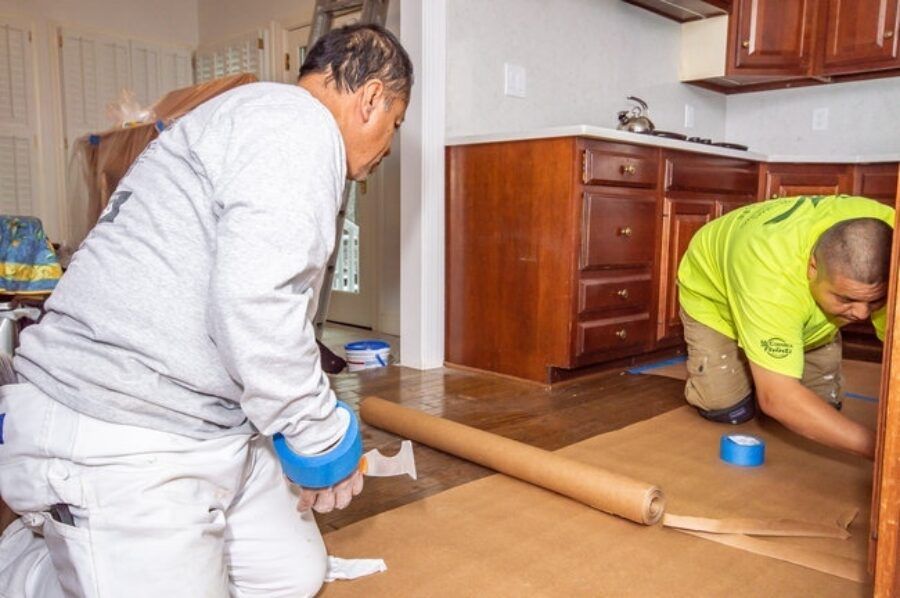
Indoor painting projects during fall and winter often mean working in lived-in spaces. Protecting your furniture and flooring from accidental spills or splatters is essential. Use high-quality drop cloths to cover floors and large pieces of furniture, and apply painter’s tape to trim, windowsills, and other areas where you don’t want paint to land.
7. Safety Gear for Indoor Painting
Indoor painting, especially in enclosed spaces, requires the right personal protective equipment (PPE). While low-VOC paints are safer, it’s still important to wear a mask to avoid inhaling dust or fumes. Choose a respirator mask designed for painting, especially if you’re using oil-based paints.
When to Hire a Professional Painter
There is a lot that goes into interior painting. Preparation, finding the right materials, and as we’ve seen, taking the right safety precautions. But just because these things need to be done doesn't mean you need to do them. If you are dealing with substantial space and want a quality finish without health risks, hiring a pro may be the way to go.
Give Williams Professional Painting a call! We’re here to help.
Frequently Asked Questions (FAQ)
Q: What is the safest type of paint to use indoors?
A: Low-VOC or zero-VOC paints are the safest for indoor use, as they release fewer harmful chemicals.
Q: How can I ensure good ventilation in the winter while painting?
A: Use fans to circulate air, slightly crack windows, or use an air purifier to reduce fumes while keeping your home warm.
Q: What temperature should my house be for painting indoors?
A: The ideal temperature range for indoor painting is between 50°F and 85°F.
Q: Can I paint in a room with no windows during the winter?
A: Yes, but it’s important to ensure proper ventilation, either by using fans or an air purifier to minimize fumes.
Related Posts